Why Flexi Hoses Are a Ticking Time Bomb in Apartments
Note: This article is intended as a general guide only, and should not be taken as legal or professional advice. It’s essential to consult with a qualified professional or seek advice from your managing agent if you have specific questions or concerns about strata living.
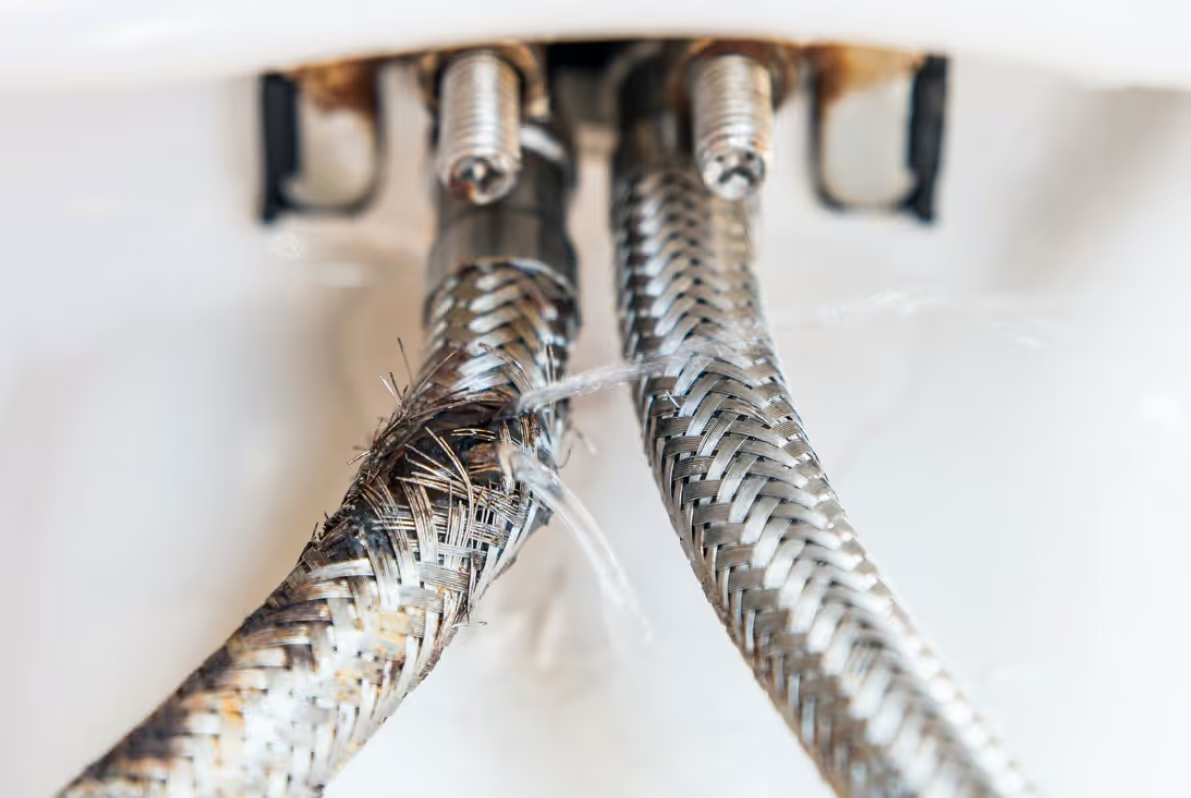
It’s the most ordinary piece of plumbing in your home, and yet it’s one of the most destructive. The humble flexi hose, that braided steel tube under your sink or toilet is the single biggest cause of internal water damage in Australian homes. When they burst, they don’t just drip. They gush. Think hundreds of litres an hour, flowing through cabinetry, floors, walls and, in apartments, into the neighbours below.
Insurers report that ruptured flexi hoses account for around 1 in 10 water damage claims, with average costs exceeding $27,500. In strata schemes the impact can multiply. A single upper-floor failure can cascade through multiple lots, leading to claims in the tens of thousands. In one case, an $8 hose split and left five apartments uninhabitable, with building repairs topping $80,000. Another Brisbane scheme was hit with an $11,000 insurance excess when an ensuite hose burst and damaged adjoining units.
And it isn’t just the water. A burst hose can spark disputes over responsibility, lead to protracted insurance wrangles, and even leave owners out of pocket when claims are only partially honoured. The Australian Financial Complaints Authority has ruled on six-figure disputes arising from exactly this scenario.
Why they fail Flexi
hoses degrade with age, corrosion and poor installation. Add in high water pressure, chemical exposure from cupboard cleaners, or simple neglect, and they’re primed to burst. Inspections consistently show around 30% of hoses in use are already at risk.
What can be done
The good news is that flexi hoses are cheap and easy to replace. Which makes proactive management a no-brainer. Practical steps for strata schemes include:
- Replacing all flexi hoses every five years as part of a rolling maintenance program.
- Insisting on WaterMark-certified, high-quality.
- products installed by licensed plumbers.
- Adding flexi hose checks into routine inspections.
- Educating residents about what’s lurking in their cupboards.
- Considering shut-off valves, pressure regulators and even leak detection systems where feasible.
For the cost of a takeaway dinner, you can prevent a claim that could wipe out months of levy contributions.
Time to get ahead of the drip
For Owners Corporations, the message is simple: don’t wait until water is running down the walls. Build flexi hose replacement into your maintenance schedule, set clear by-laws if necessary, and communicate the risk openly with owners and tenants. Prevention is vastly cheaper than the cure, and the case studies show just how ugly the cure can be.
Insurance Costs
Burst flexi hoses are one of the most common and costly water damage claims in residential buildings. When they fail, the resulting damage often extends well beyond the immediate lot, spreading into common property or neighbouring units and driving up claim costs. Each claim not only triggers an excess payment for the Owners Corporation or lot owner but also contributes to the overall claims history of the scheme. Insurers weigh this history heavily when setting renewal premiums, meaning a series of flexi hose failures can quickly push insurance costs higher for everyone.
In short, what seems like a small piece of plumbing hardware can have outsized financial consequences, both through excesses payable at the time of a claim aup claim costs. Each claim not only triggers an excess payment for the Owners Corporation or lot owner but also contributes to the overall claims history of the scheme. Insurers weigh this history heavily when setting renewal premiums, meaning a series of flexi hose failures can quickly push insurance costs higher for everyone. In short, what seems like a small piece of plumbing hardware can have outsized financial consequences, both through excesses payable at the time of a claim and through inflated premiums in years to come
Case Studies
Case Study 1 – Sutherland
On 19 June 2025, a burst flexible hose in the bathroom vanity of a residential lot caused extensive water damage. The leak ran for several hours before being isolated, saturating carpets throughout the unit and damaging built-in joinery, doors, wardrobes and subflooring. Minor water impact was also recorded to the lot below. Strata Community Insurance (SCI) set a reserve of $14,901.48 to address resultant damage repairs. ARC Projects have been engaged to complete reinstatement works, with commencement scheduled for 1 October 2025.
Case Study 2 – Warwick Farm
Incident: On 21 July 2024, a burst flexible hose in a unit caused significant water damage, rendering the property uninhabitable for a period. Temporary accommodation was arranged for the affected lot owner while repairs proceeded. The insurer, CHU, finalised the claim on 30 July 2025 with total costs incurred of $32,224.78, inclusive of both repairs and accommodation expenses.
Case Study 3
Incident: On 2 April 2024, a burst flexible hose beneath a kitchenette sink caused water to escape into the unit and through to the ceiling below. Plumbing repairs were carried out immediately. The ceiling in the living area beneath sustained irreparable damage and required full replacement, along with associated plastering and painting works. Insurance Investment Solutions Pty Ltd accepted the claim, finalising it on 13 June 2024 for $10,417.30, less a $2,500 policy excess. The works were completed without the need for temporary accommodation.
Case Study 4
Medium apartment block, upper-level hose bursts, multi-lot damage Strata Community Insurance published a case study where a flexi hose in an upper-floor apartment split while occupants were away. Water tracked down through three floors. Building repairs totalled about $80,000, five lots had contents damage, and several residents had to vacate for weeks. The article notes the hoses were ~$8 each and that routine checks weren’t part of the maintenance program.
Source: Strata Community Insurance:
https://stratacommunityinsure.com.au/water-damage-can-beavoided
Case Study 5
Brisbane apartment, claim lodged and a hefty excess Rivers Insurance reported owners in a Brisbane apartment paid an $11,000 excess after an ensuite flexi hose burst, causing wider building damage and triggering a strata insurance claim. It’s a useful illustration of downstream costs even when the policy responds.
Source:
Case Study 6
AFCA determination after insurer dispute on burst flexi-hose damage While not strata-specific, it’s directly relevant to coverage outcomes: AFCA required Suncorp to pay $155,359 plus compensation after wrongly limiting a burst flexi-hose claim. The dispute centred on what damage was “resultant” vs excluded; AFCA found for the homeowner on key items. Helpful when committees or owners worry about claim scope.
Source: Insurance News
https://www.insurancenews.com.au/daily/insurer-in-hot-water-after-flexi-pipe-dispute













Related Files