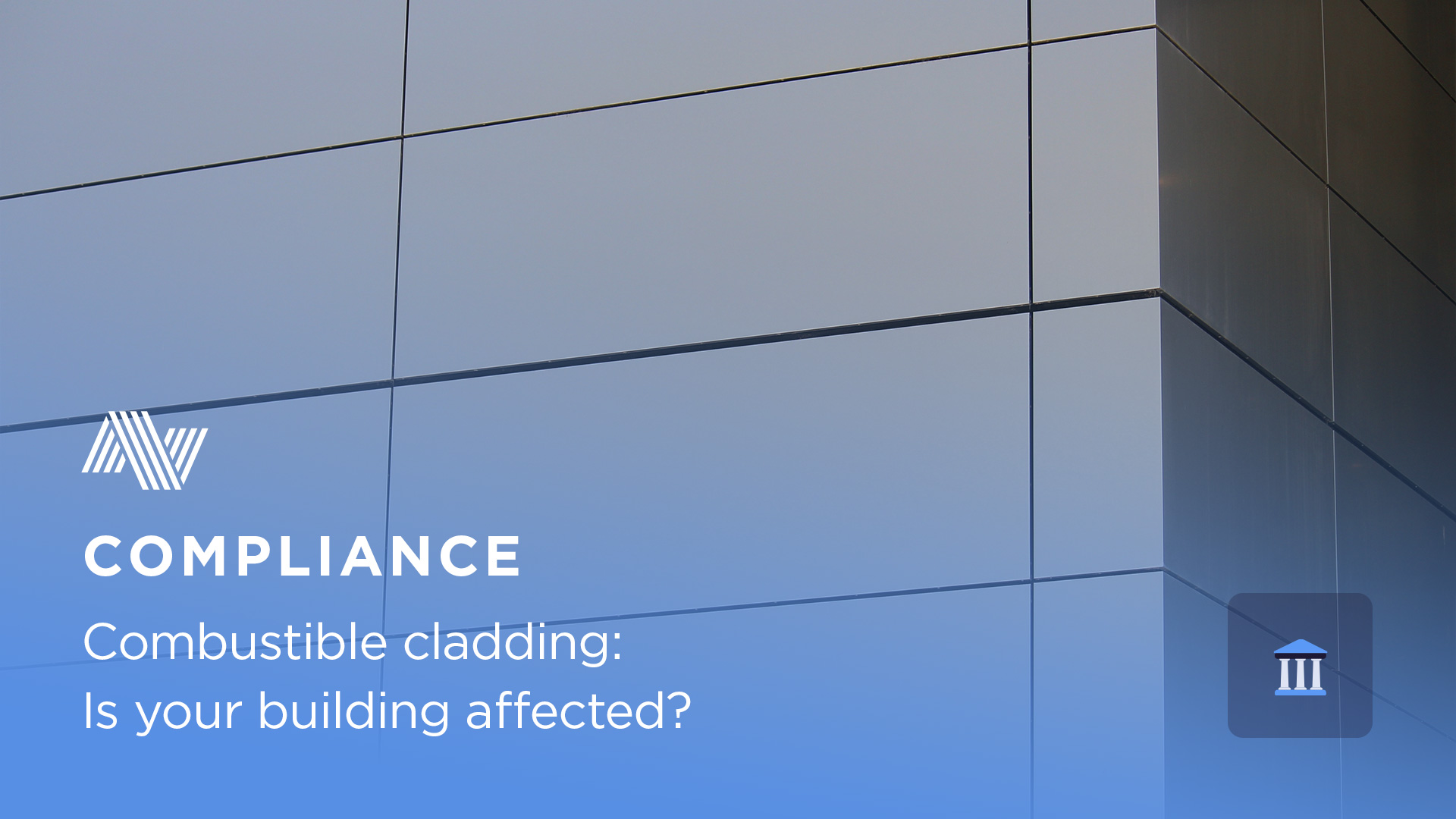
Combustible cladding: Is your building affected?
Note: This article is intended as a general guide only, and should not be taken as legal or professional advice. It’s essential to consult with a qualified professional or seek advice from your managing agent if you have specific questions or concerns about strata living.
This version of the article was updated on .
The one-minute guide
What combustible cladding is: External wall cladding materials, particularly aluminium composite panels (ACP) and expanded polystyrene (EPS), that can catch fire and spread flames rapidly, significantly increasing the risk to occupants in a fire.
Why it matters: The 2017 Grenfell Tower fire in London, where 72 people died, was driven by the rapid spread of combustible ACP cladding. The same material type was used on Australian buildings built during the same era.
Which buildings are at risk: Multi-storey residential buildings (apartments), hotels, hospitals, aged care facilities, and public assembly buildings constructed or renovated between approximately 1994 and 2018 are most likely to be affected.
What NSW law requires: Building owners must register buildings with combustible cladding with the NSW Government. Banned products (ACP with more than 30% polyethylene core) cannot legally remain without remediation.
What the OC must do: Identify whether combustible cladding is present, register if required, engage a qualified fire safety engineer, and develop and implement a remediation plan.
Project Remediate: A NSW Government program offering eligible Class 2 residential apartment buildings 10-year interest-free loans to fund cladding removal and replacement.
Combustible cladding is one of the most serious safety and financial issues facing strata buildings in NSW today. It affects insurance premiums, property values, sale transactions, and in the worst case, the safety of people living in the building. This article explains what combustible cladding is, how to find out if your building is affected, what the law requires, and what the OC's obligations and options are in NSW.
What is combustible cladding and why is it dangerous?
Cladding is the external material applied to the outside walls of a building. It serves both aesthetic and functional purposes, including insulation and weather protection. Combustible cladding refers to cladding materials that, when exposed to fire, can ignite, melt, and allow fire to spread rapidly across a building's external facade.
The key concern is not just that these materials burn, but the speed at which they allow fire to travel. In a building clad with combustible material, a fire that starts on one floor can reach the roof in minutes. The Grenfell Tower fire in London in June 2017, in which 72 people died, was the event that forced governments worldwide to confront this risk. The fire spread from a single kitchen appliance on the fourth floor to engulf the entire 24-storey building in under an hour, largely driven by the combustible ACP cladding on its exterior.
The two main types of combustible cladding
Two cladding materials account for most of the risk in Australian buildings:
- Aluminium Composite Panels (ACP): ACP consists of two thin sheets of aluminium bonded together with a core material. The critical variable is the core. ACP with a high polyethylene (PE) core is highly combustible. ACP with a mineral-based core is significantly less so. NSW has banned ACP with a core comprised of more than 30% polyethylene by mass for use on external walls. This is sometimes called 'FR-grade' (fire retardant) versus 'PE-grade' (combustible). The banned PE-grade was widely used in construction between approximately 1994 and 2018 because it was cheaper and lighter than mineral-core alternatives.
- Expanded Polystyrene (EPS): EPS is a foam-based insulation material that has been used as an external cladding or insulation backing on some buildings. It is classified as B3 (highly flammable) and can melt, drip burning material, and spread fire rapidly. While EPS may comply with the Building Code on buildings of two storeys or less in some contexts, insurers treat it as a significant fire risk regardless of building height, and underwriters will seek detailed information about any EPS present.
Not all cladding is dangerous
The presence of cladding on a building does not automatically mean it is combustible or non-compliant. Many buildings have cladding that meets fire safety standards: aluminium composite panels with a mineral core, fibre cement sheeting, ceramic or terracotta panels, and various other materials that are either non-combustible or fire-resistant. The issue is specifically with PE-core ACP and EPS products, and with how they were installed. A qualified fire safety engineer is needed to determine whether the cladding on a specific building poses an unacceptable risk.
| Audience | Relevance | Why it matters |
|---|---|---|
| Lot owners in affected buildings | Critical | Your safety, insurance, and property value are directly affected. You have the right to know the status of your building's cladding and what the OC is doing about it. |
| Strata committee members | Critical | The OC has legal obligations around registration, fire safety, and remediation. Failure to act can expose committee members and the OC to liability. |
| Strata managers | Essential | You advise the committee, coordinate registration, engage fire safety professionals, and manage the remediation process. |
| Prospective buyers | Very important | Buying into a building with unresolved combustible cladding creates exposure to significant special levies and ongoing insurance difficulties. |
| Investors and landlords | Very important | Buildings with combustible cladding face higher insurance premiums, potential for reduced coverage, and disclosure obligations on sale. |
TL;DR: Combustible cladding, primarily PE-core ACP and EPS, allows fire to spread rapidly across a building facade. NSW banned PE-core ACP in 2018. Buildings built between 1994 and 2018 carry the highest risk of being affected.
Which buildings are at risk?
Combustible cladding was widely used in construction in Australia from the mid-1990s until approximately 2018, when bans and mandatory requirements began taking effect. Buildings constructed or significantly renovated during this period using ACP or EPS on their external walls are most likely to be affected.
Building types covered by the NSW registration requirement
Under the Environmental Planning and Assessment Amendment (Identification of Buildings with Combustible Cladding) Regulation 2018, the following types of buildings with external combustible cladding must be registered with the NSW Government:
- Residential apartment buildings (Class 2) of two or more storeys
- Residential buildings used for lodging, such as hotels, boarding houses, student accommodation, and backpacker hostels
- Aged care facilities, hospitals, and day surgeries
- Public assembly buildings, including theatres, cinemas, schools, and churches
Cladding types that trigger the registration requirement
Registration is required if the building has external cladding made from:
- Metal composite panels, including products with aluminium, zinc, or copper outer layers bonded to a core material
- Insulated cladding systems, including systems incorporating polystyrene (EPS), polyurethane, or polyisocyanurate
How do I know if my building has combustible cladding?
You cannot determine this visually without expert assistance. PE-core ACP and mineral-core ACP can look identical from the outside. The only reliable way to know is to:
- Check whether your building has been registered on the NSW Cladding Registration portal
- Check whether the NSW Cladding Taskforce has already inspected your building and issued a risk assessment
- Engage a qualified fire safety engineer to inspect and test the cladding
Your strata manager can check the registration status and any Cladding Taskforce findings on your building's behalf. Residents and owners can also ask their strata manager for the outcome of any fire safety inspections that have been carried out.
TL;DR: Residential apartment buildings, hotels, hospitals, aged care facilities, and public assembly buildings of two or more storeys with ACP or EPS cladding must be registered in NSW. Buildings built between 1994 and 2018 carry the highest risk.
The NSW regulatory framework
The ban on PE-core ACP
In 2018, NSW banned the use of aluminium composite panels with a core comprised of more than 30% polyethylene by mass on external walls, effective from 15 August 2018. This ban was made under the Building Products (Safety) Act 2017 by the NSW Fair Trading Commissioner.
Importantly, the ban does not automatically require existing buildings to remove cladding that was installed before the ban came into force. For buildings that already have banned ACP installed, the Commissioner can issue an 'affected building notice' to the owners, occupiers, local council, and relevant enforcement authority. Whether rectification is required is then assessed on a case-by-case basis, taking into account the entire building, its fire safety systems, the coverage and placement of the cladding, and the specific risk it poses. The ban itself is primarily aimed at preventing future use. Enforcement against existing buildings operates through the affected building notice and rectification order process.
Mandatory registration
Under the 2018 regulation, building owners with combustible cladding were required to register on the NSW Cladding Registration portal. Buildings occupied before 22 October 2018 had to be registered by 22 February 2019. Buildings first occupied after 22 October 2018 must be registered within four months of first occupation. A strata manager can register on behalf of an owners corporation.
The specific building classes covered by the ACP ban
The PE-core ACP ban applies to buildings of specific construction types and storey heights under the National Construction Code:
Type A construction: Class 2, 3 and 9 buildings of 3 or more storeys; Class 5, 6, 7 and 8 buildings of 4 or more storeys.
Type B construction: Class 2, 3 and 9 buildings of 2 or more storeys; Class 5, 6, 7 and 8 buildings of 3 or more storeys.
Class 2 includes apartment buildings. Classes 5–8 include offices, retail, warehouses, and carparks. Class 3 includes hotels and boarding houses. Class 9 includes hospitals and assembly buildings. If you are unsure which class and construction type applies to your building, your strata manager, local council, or a fire safety engineer can advise.
The NSW Cladding Taskforce
The NSW Cladding Taskforce was established in July 2017 to systematically identify buildings with potentially combustible cladding and support local councils in addressing the risk. The Taskforce audited over 185,000 building records and inspected more than 4,000 buildings across NSW. Fire and Rescue NSW conducted operational assessments of each building, and those considered higher risk were referred to local councils or the Department of Planning for further investigation and action.
The Taskforce maintains a tracking list of buildings in the remediation process. As at mid-2025, hundreds of buildings across NSW remained at various stages of assessment, remediation planning, and active works.
Fire Safety Orders
Where a building is assessed as having combustible cladding that poses an unacceptable risk, the local council or Fire and Rescue NSW can issue a Fire Safety Order requiring the OC to carry out specified works. These orders are enforceable and failure to comply can result in council enforcement action. Any Fire Safety Order or 'affected building' notice received by the OC must be disclosed in any contract of sale for a lot in the scheme.
Design and Building Practitioners Act 2020
Any cladding rectification work in NSW must comply with the Design and Building Practitioners Act 2020 (DBPA). This means a registered design practitioner must prepare and lodge designs for the remediation work on the NSW Planning Portal before a registered building practitioner can commence work. The DBPA requirements apply whether the work is done under Project Remediate or independently by the OC. Works that do not comply with the DBPA may be deemed non-compliant, which can have adverse insurance consequences.
TL;DR: NSW banned PE-core ACP in 2018. Buildings with combustible cladding must be registered. The Taskforce has inspected thousands of buildings. Any remediation work must comply with the DBPA and be lodged on the NSW Planning Portal.
What the OC must do
If your building has or may have combustible cladding, the OC has a series of obligations. These are not optional. Failure to act can expose the OC to enforcement action, and committee members who knowingly allow a safety risk to go unaddressed may face personal liability.
| Step | Action | Detail |
|---|---|---|
| 1 | Check registration status | Confirm whether your building has been registered on the NSW Cladding Registration portal. Your strata manager can check this. If the building has combustible cladding and has not been registered, registration should be completed immediately. |
| 2 | Review building records | Review construction plans, specifications, and building documents to determine whether ACP or EPS was used in the building's external walls. This may involve contacting the original developer or builder, or engaging a consultant to review the original design documentation. |
| 3 | Engage a fire safety engineer | Appoint a qualified fire safety engineer to inspect and test the cladding. The engineer will determine whether the material is a banned product, assess the risk it poses given the building's design and fire safety systems, and recommend a course of action. A visual inspection alone is not sufficient to determine whether ACP is combustible. |
| 4 | Obtain a fire safety risk assessment report | The fire safety engineer will produce a detailed report setting out their findings, the risk rating, any interim safety measures recommended, and whether rectification is required. This report is essential for engaging with the insurer, the council, and Project Remediate if applicable. |
| 5 | Implement interim safety measures if recommended | Pending full remediation, the engineer may recommend interim measures to reduce risk, such as additional fire detection or suppression systems, evacuation procedure updates, restrictions on barbecues or heating on balconies near cladding, or enhanced monitoring. These must be implemented promptly. |
| 6 | Develop a remediation plan | The OC must develop a plan to remove and replace the combustible cladding with compliant materials. This plan must comply with the DBPA, and designs must be lodged on the NSW Planning Portal by a registered design practitioner before works begin. The OC should consider whether it is eligible for Project Remediate funding. |
| 7 | Carry out and certify remediation works | Remediation must be carried out by a registered building practitioner in accordance with the approved design. Upon completion of works under Project Remediate, the OC receives a Remediation Assurance Certificate. This certificate provides insurers with confidence that the combustible cladding risk has been addressed and should result in improved insurance terms. |
TL;DR: The OC must register, engage a fire safety engineer, obtain a risk assessment, implement any interim safety measures, develop a DBPA-compliant remediation plan, and carry out and certify the works.
Project Remediate: the NSW Government's support program
Project Remediate is a voluntary program introduced by the NSW Government to assist eligible Class 2 residential apartment buildings with the cost of cladding remediation. It is managed by the NSW Building Commission and has been extended to 2027, with more than $105 million in targeted investment as at late 2025.
What Project Remediate offers
- 10-year interest-free loan: The NSW Government pays the interest on the remediation loan. Lannock Strata Finance administers the loans on the government's behalf. The OC repays the principal over 10 years via monthly direct debit from its bank account.
- Project management: Hansen Yuncken is the government-appointed Managing Contractor. They manage the investigation, design, and construction phases on behalf of the OC, providing a centralised procurement model that removes much of the complexity from the OC.
- Two remediation design options: The design team presents the OC with two compliant design options for the replacement cladding. The OC chooses between them.
- Remediation Assurance Certificate: On completion, the OC receives a certificate confirming the works are compliant and the risk has been addressed. This is the key document for restoring normal insurance terms.
- Hardship support: A hardship support framework is available for owners who have difficulty meeting their share of loan repayments.
Eligibility requirements
To participate in Project Remediate, a building must:
- Be a Class 2 residential apartment building in NSW (multi-use buildings, such as part commercial and part residential, are also eligible)
- Have been confirmed by the Cladding Taskforce and the relevant consent authority (local council or the Department of Planning) to have a high-risk combustible cladding facade that requires remediation
How to register interest
Eligible OCs should contact the NSW Building Commission to register interest. The Building Commission can be contacted at projectremediate@customerservice.nsw.gov.au or through the NSW Planning Portal. Retrospective financial assistance may also be available for OCs that began cladding remediation before Project Remediate was introduced.
What if your building is not eligible for Project Remediate?
Not all buildings with combustible cladding are eligible for Project Remediate. Buildings that are not Class 2, or that have not been confirmed as high-risk by the Taskforce, must fund remediation themselves. This is typically done through a combination of the OC's capital works fund and a special levy on owners. The cost of cladding remediation varies significantly by building size, the extent of cladding, and the chosen solution, but can run to hundreds of thousands of dollars or more for larger buildings. In some cases, the OC may also pursue legal action against the original builder or developer for the cost of rectification. Owners in buildings without Project Remediate access should seek legal advice about their options.
TL;DR: Project Remediate offers eligible Class 2 residential buildings 10-year interest-free loans, managed project delivery, and a Remediation Assurance Certificate on completion. Contact the NSW Building Commission to register interest.
Insurance implications
Combustible cladding has a significant and direct impact on building insurance. This is one of the most practical consequences for owners in affected buildings, regardless of where their building sits in the remediation process.
Disclosure obligations
The OC has a duty of disclosure to its insurer. When renewing or obtaining strata building insurance, the OC must be able to confirm whether ACP, expanded polystyrene, or other combustible cladding materials are present on the building. Insurers ask for specific product names of any ACP present, not just generic references. Where the OC cannot confirm the absence of combustible cladding, the insurer may require a detailed cladding report before providing terms.
Impact on premiums and coverage
Buildings with identified combustible cladding face:
- Significantly higher insurance premiums, reflecting the increased fire risk
- Higher excesses on claims, particularly for fire-related events
- Possible restrictions on coverage, particularly where the cladding is classified as high-risk
- In some cases, difficulty obtaining insurance at all, with some insurers declining to quote
EPS is treated particularly firmly by insurers, with some declining to offer cover if the percentage of EPS in the building exceeds their underwriting appetite. Buildings that have received a fire safety engineer's report, even if it identifies risk, are generally viewed more favourably by insurers than buildings that have no assessment at all, as the report demonstrates awareness and due diligence.
After remediation
Once cladding remediation is complete, particularly where a Remediation Assurance Certificate has been issued under Project Remediate, the OC should promptly contact its insurance broker to have the risk reassessed. A successfully remediated building should return to normal insurance terms and premiums, which over time helps recover some of the cost burden of the remediation itself through lower insurance costs.
Failure to disclose can void your insurance
If the OC is aware of combustible cladding on the building and fails to disclose this to the insurer at renewal, the insurer may have grounds to refuse a claim or void the policy. Non-disclosure of a material fact is one of the most serious issues in insurance law. The OC and committee must ensure full and accurate disclosure at every renewal, and must notify the insurer of any new information about cladding risk as it arises during the policy period.
TL;DR: Buildings with combustible cladding face higher premiums, higher excesses, and potentially restricted or refused coverage. Full disclosure to the insurer is mandatory. A Remediation Assurance Certificate helps restore normal insurance terms after completion.
Implications for buyers and sellers
Buying into a building with combustible cladding
Before buying a strata lot, prospective purchasers should investigate whether the building has combustible cladding and, if so, what stage of remediation it is at. Key checks include:
- Request a strata inspection report, which should include details of any outstanding orders, fire safety issues, or cladding investigations
- Check the strata records (available on payment of the prescribed fee) for meeting minutes, committee resolutions, and any fire safety engineer reports relating to cladding
- Ask the selling agent and strata manager whether the building is registered on the Cladding Register and whether a Fire Safety Order or 'affected building' notice has been issued
- Review the capital works fund balance and any special levy resolutions to understand what costs the OC has already committed to or is planning for
Buying into an unremediated building can be costly
If you purchase a lot in a building with unresolved combustible cladding, you inherit your proportionate share of the remediation cost. Depending on the building's size and the extent of the cladding, your share of a special levy for remediation could be tens of thousands of dollars. Insurance difficulties and higher premiums also affect your levies going forward. Do your due diligence before exchange of contracts, not after.
Selling a lot in an affected building
If the OC has received a Fire Safety Order or an 'affected building' notice in relation to combustible cladding, this must be disclosed in the contract of sale for any lot in the scheme. Failure to disclose can give the purchaser rights to rescind the contract. The strata manager can confirm whether any such notices or orders are on record and ensure they are included in the strata inspection report.
TL;DR: Buyers must investigate cladding status before exchange. If a Fire Safety Order or affected building notice has been issued, it must be disclosed in the contract of sale. Unremediated cladding can result in large future special levies for new owners.
What residents can do right now
While cladding remediation is ultimately the OC's responsibility, there are practical steps residents can take to reduce fire risk in the interim:
- Do not use barbecues, outdoor heaters, or open flames on balconies, particularly near any external cladding
- Keep balconies clear of combustible materials, including stored furniture, boxes, and rubbish
- Ensure smoke alarms inside your lot are connected, working, and not covered or disabled
- Know your building's evacuation plan and evacuation assembly point
- Keep fire stairwells, corridors, and common area exits clear of objects at all times
- Report any concerns about fire safety, cladding damage, or balcony storage to your strata manager promptly
In the event of a fire: always call Triple Zero immediately
If a fire breaks out in a building with combustible cladding, it can spread extremely fast. Do not attempt to fight the fire yourself. Call Triple Zero (000) immediately, activate the building's fire alarm if it has not already triggered, and follow the building's evacuation plan. Once you are outside, stay outside. Fire and Rescue NSW firefighters train specifically for high-rise and cladding-related fire events.
TL;DR: While remediation proceeds, residents can reduce risk by keeping balconies clear of combustibles, not using open flames near cladding, keeping corridors clear, and knowing their evacuation plan.
Frequently asked questions
How do I find out if my building is registered on the NSW Cladding Register?
Ask your strata manager. They can check the NSW Cladding Registration portal and confirm whether your building has been registered. You can also visit the NSW Planning Portal at planning.nsw.gov.au for information on the registration process and to search relevant records.
Our building was inspected by the Cladding Taskforce and cleared. Does that mean we have no cladding issue?
Not necessarily. The Taskforce's operational assessments were risk-based and not exhaustive technical inspections. A Taskforce clearance means the building was not identified as posing a high fire risk based on the assessment conducted at that time. It does not guarantee that no combustible materials are present, and it does not remove the OC's ongoing obligations around fire safety. If there is any doubt, a fire safety engineer's inspection is the only way to be certain.
The committee does not want to spend money on a cladding inspection. Can they refuse?
No. Where there is reasonable cause to believe a building may have combustible cladding, the committee has an obligation to investigate. This flows from both the registration requirements under NSW law and the general duty under Section 106 of the SSMA to maintain common property in a safe and serviceable condition. A committee that knowingly ignores a potential safety risk could expose the OC and individual committee members to significant legal liability if an incident occurs.
We have combustible cladding and our insurer has increased our premium significantly. Is this normal?
Yes. Insurers price risk, and a building with identified combustible cladding presents a materially higher fire risk. Premium increases, higher excesses, and in some cases restricted coverage are a standard market response. The most effective way to address the insurance cost is to complete remediation and obtain a Remediation Assurance Certificate, which gives insurers confidence that the risk has been removed. In the interim, your strata manager or insurance broker can approach the wider market to ensure you are getting the most competitive terms available for your risk profile.
Who is responsible for the cost of rectification: the OC, the builder, or the developer?
Ultimately the OC is responsible for ensuring the building is rectified, but that does not mean it must bear the cost. OCs may have legal claims against the original builder or developer. Combustible cladding is a prescribed major defect under the Home Building Regulation 2014, which means the 6-year statutory warranty period under the Home Building Act 1989 (NSW) applies, running from the date of the occupation certificate. Once that period expires, the Design and Building Practitioners Act 2020 may still provide a further avenue through its statutory duty of care, which has its own 6-year period running from when the OC knew or ought to have known of the loss, subject to a 10-year long stop overall. These regimes operate in parallel and both should be considered. Given the complexity and the time-sensitivity of these claims, OCs that believe the original developer or builder is responsible should seek specialist strata or construction law advice promptly.
We are in the process of remediating. What should we tell owners about the timeline?
Transparency is the best approach. The OC and strata manager should provide owners with regular written updates on the remediation process: what stage the works are at, what the expected timeline is, what interim safety measures are in place, and what the expected cost impact on levies will be. Owners who are not kept informed are more likely to raise concerns at AGMs or through NCAT. A simple quarterly update email or notice board post can head off much of the anxiety that typically surrounds a cladding remediation project.
TL;DR: Committees cannot refuse to investigate a reasonable cladding concern. Taskforce clearance does not remove the OC's obligations. Premium increases from insurers are standard but should improve after remediation. Legal action against builders and developers is possible but time-sensitive.
Important
This article provides a general overview of the NSW combustible cladding framework as at the date of publication. The regulatory requirements in this area are complex and have evolved significantly since 2017. Individual buildings vary greatly in their cladding composition, risk profile, and stage of remediation. For advice specific to your building, always engage a qualified fire safety engineer and consult your strata manager or a strata lawyer. Relevant legislation and programs: Building Products (Safety) Act 2017 (NSW); Environmental Planning and Assessment Amendment (Identification of Buildings with Combustible Cladding) Regulation 2018; Design and Building Practitioners Act 2020 (NSW); Strata Schemes Management Act 2015 (NSW), Section 106; Project Remediate (NSW Building Commission).
Related reading
- Insurance in strata schemes: coverage requirements and claims — learning.netstrata.com.au
- What the latest strata law changes mean for owners in 2025 and 2026 — learning.netstrata.com.au
- Disputes and resolution: conflict resolution processes — learning.netstrata.com.au










Related Files